
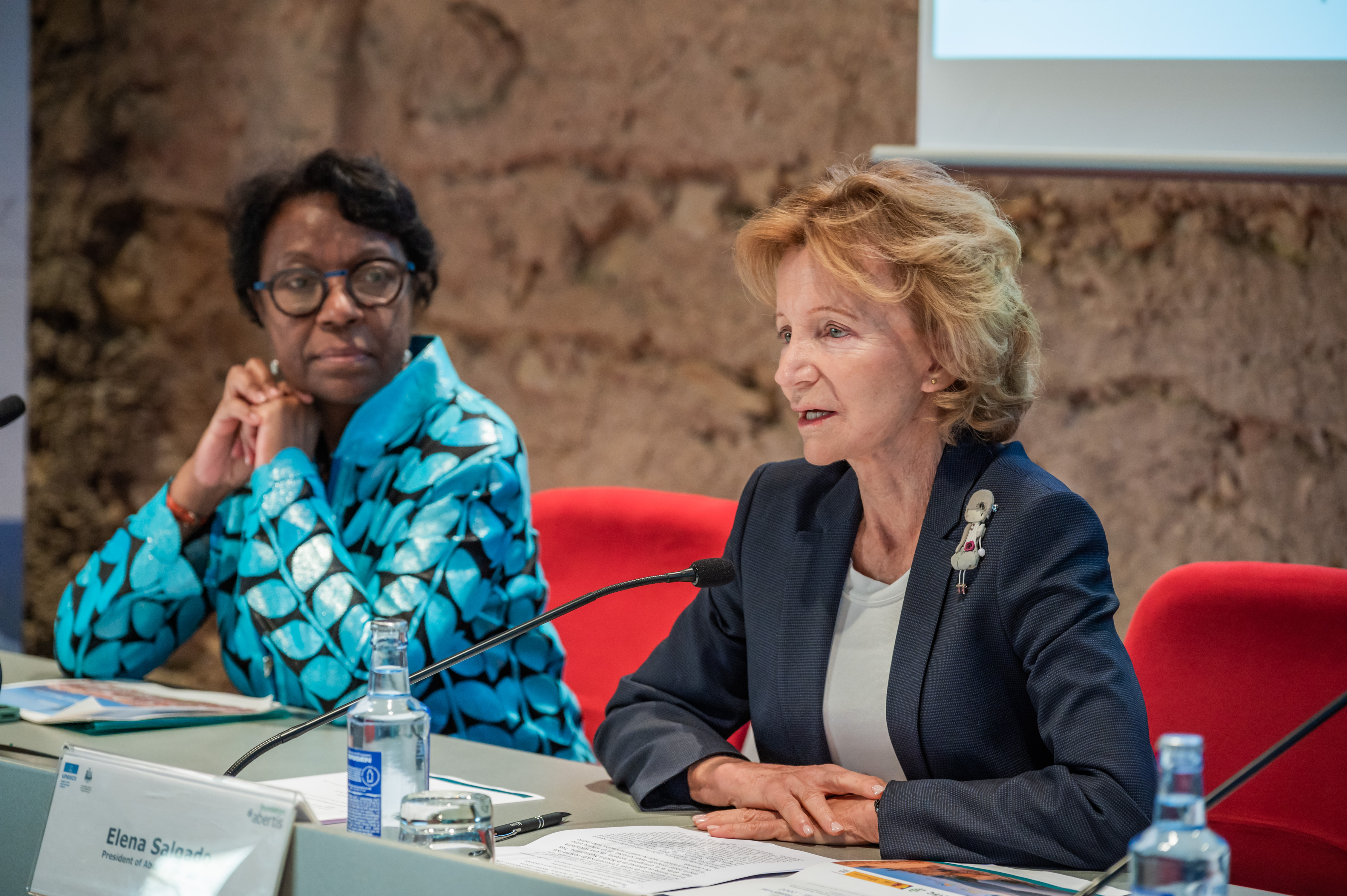
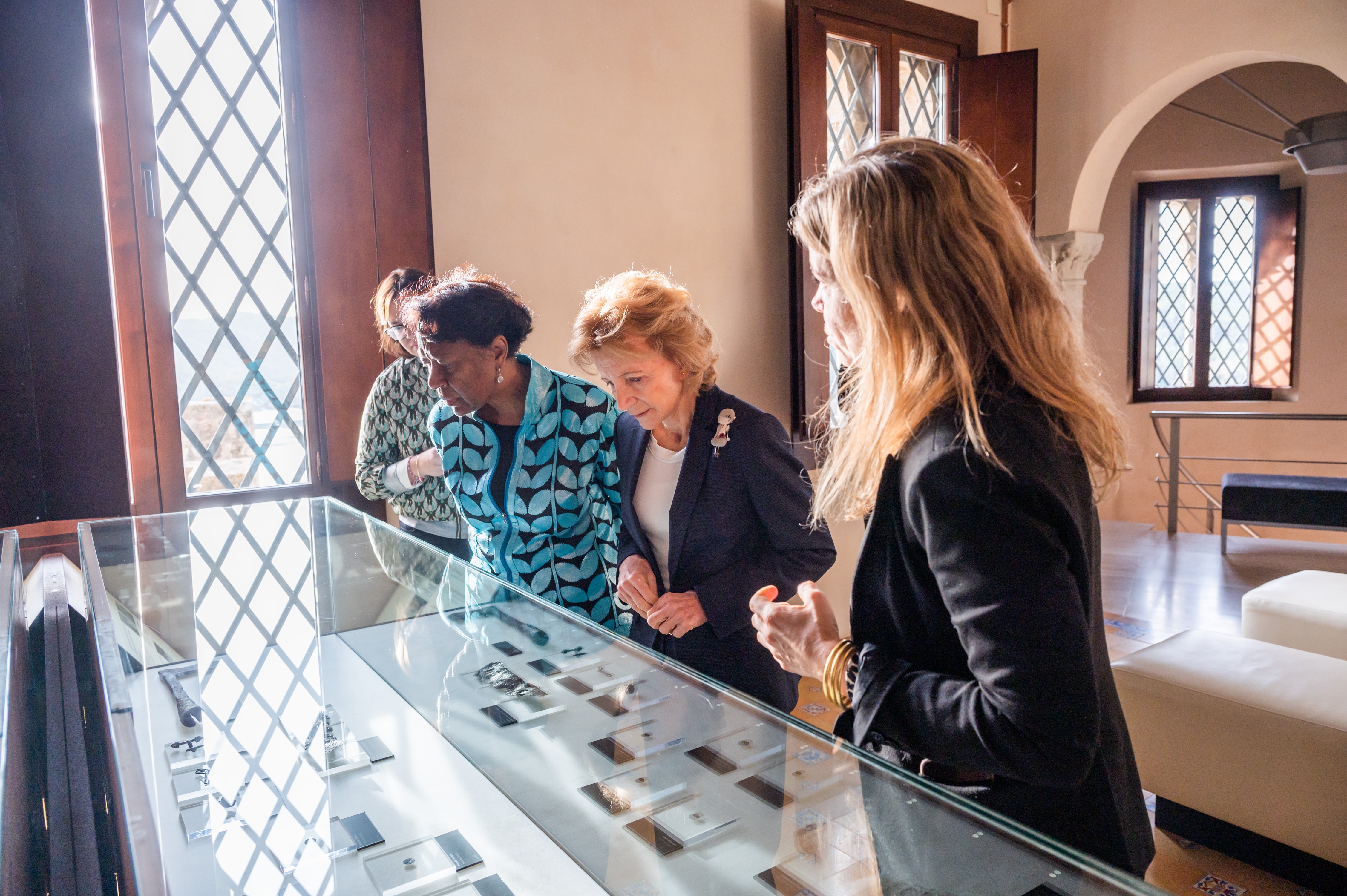
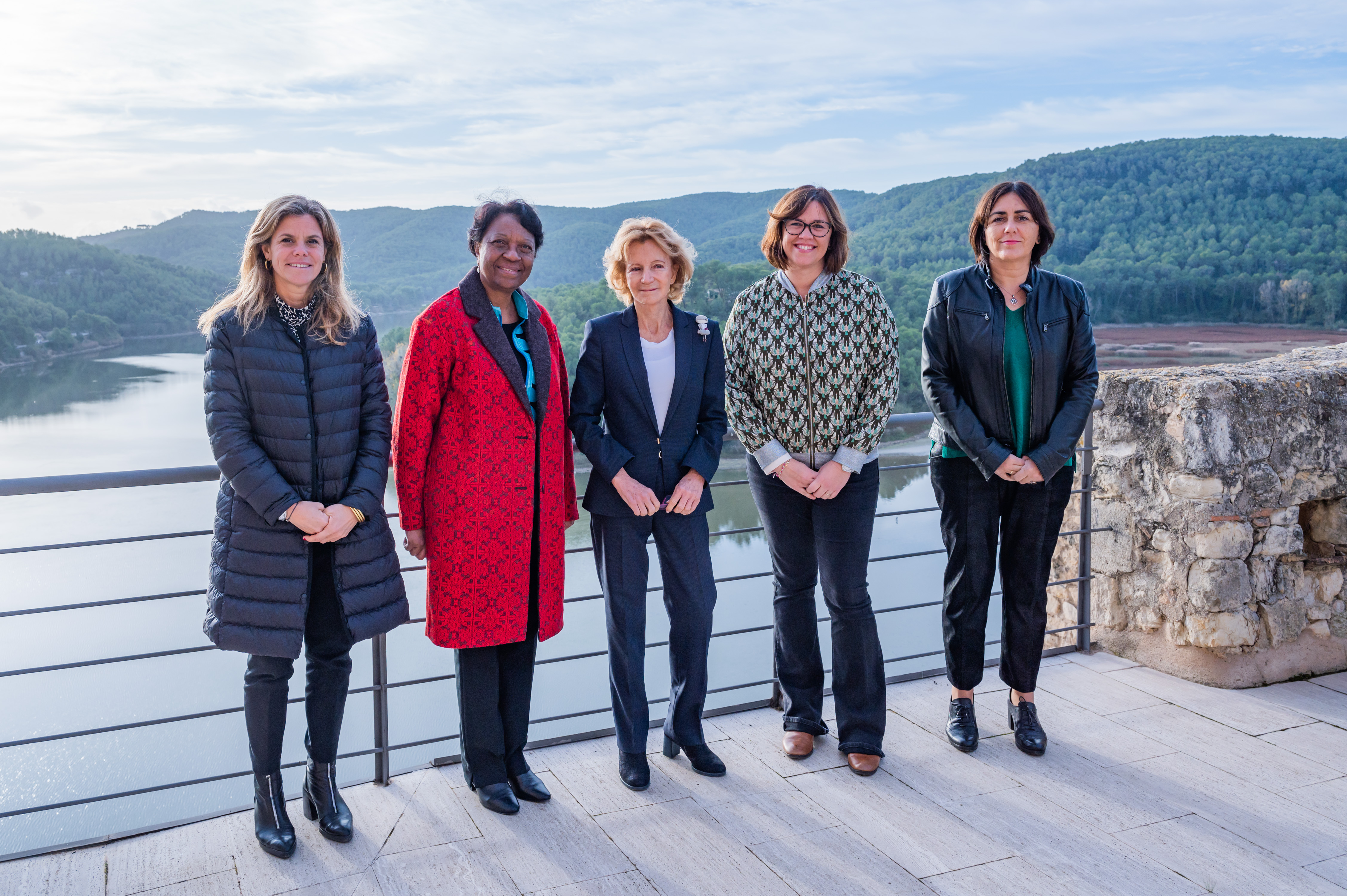
The headquarters of the Abertis Foundation, Castellet Castle, the UNESCO International Centre for Mediterranean Biosphere Reserves, hosted the 3rd Meeting of Mediterranean Biosphere Reserve Managers on 23, 24 and 25 November. The main objective of this three-day working meeting was to redefine the future strategic lines of work to consolidate this network as a new UNESCO thematic network (MedMaB).
More than 30 managers from 8 different countries that form part of this network have met in these three days to consolidate and officialise the Mediterranean Biosphere Reserve Network (MedMaB) in the first face-to-face meeting after the stoppage caused by the pandemic. One of the main innovations agreed to boost the exchange of knowledge has been the creation of the Documentation Centre, to compile, structure, synthesise and disseminate the experiences acquired in the Mediterranean Biosphere Reserves. It intends to establish itself as a living, continuous storage space, constantly being revised and updated and at the service of the scientific community.
Elena Salgado, chairlady of the Abertis Foundation, opened the opening ceremony by highlighting the importance of this initiative: "The centre provides technical assistance in Spain, but also in the rest of the countries that make up the Mediterranean region. This assistance is structured through training, research and capacity-building activities. In fact, this castle has never hosted such an ambitious and educational project as the one that now occupies it".
The agenda is complemented by debate and work sessions related to the values and permanence to the Mediterranean culture, the different missions and affiliations of this Network, which will be discussed over these days until the new Strategic Plan of the MedMab Network is established.
This Mediterranean Network was launched in 2015 with one mission: to promote the creation of a Network of Mediterranean Biosphere Reserves that could build bridges of dialogue, cooperation and exchange of knowledge and experience between reserves on both sides of the Mediterranean basin.
Currently, 74 biosphere reserves from 17 different countries (Albania, Algeria, Bulgaria, Croatia, France, Greece, Israel, Italy, Jordan, Lebanon, Montenegro, Morocco, Portugal, Republic of North Macedonia, Slovenia, Spain and Tunisia) are members of the network.

About the Abertis Foundation
The Abertis Foundation was created in 1999 as a non-profit organisation with the aim of contributing to the sustainable development of the territories where Abertis is present. In this respect, the Foundation prioritises actions related to road safety, the environment, social and cultural activity.
The Abertis Foundation carries out actions aimed at improving road safety with the aim of reducing the accident rate. These actions are focused on road safety education for children, awareness-raising for young people and prevention for older drivers.
It also promotes social actions in favour of the most disadvantaged groups by incorporating them into its road safety actions in favour of sustainability and the environment.
It also complements the activities of the Abertis Group in the countries where it is present, such as Spain, France, Puerto Rico, Chile, Argentina, Brazil and Mexico, and contributes to the development of the Abertis Network.
15 June 2026
• This is one of the main findings of a study conducted by Universidad Politécnica de Madrid (UPM) in collaboration with the TRANSyT Transport Research Centre, and promoted by the Abertis Foundation as part of its international Chairs programme, analysing mobility habits, infrastructure assessments and future expectations.
• 77% of users believe toll roads have better pavement conditions than non-toll roads, and 67% say they feel safer driving on them.
• 85% call for real-time information on accidents and roadworks to be available directly in vehicles, while 75% support expanding barrier-free payment systems.
• 74% say they would use motorways more if they had access to a free electronic payment device, and seven out of ten already use mobile apps to plan their journeys.
21 May 2026
The Abertis Foundation has presented the Abertis Spain 2026 Awards, which recognise research excellence in sustainable mobility, infrastructure and transport, in an edition that also marks the beginning of a new stage of the Abertis Chairs International Network, which is consolidating itself as an international mobility observatory.
The Abertis Chairs International Network, coordinated by the Universidad Politécnica de Madrid (UPM), promotes collaboration between some of the most prestigious universities in the countries in which Abertis operates, to promote sustainable mobility through data analysis, applied research and the development of innovative projects.
The event, held as part of a day of debate on road infrastructure, brought together experts from academia, business and institutions to address issues such as innovation, digitalisation, user experience and financing models.